

As AI-driven tools redefine software engineering, the landscape changes at breakneck speed. Business professionals dismissing coding and IT integration skills as irrelevant may soon be outpaced.
What if the next wave of innovation hinges not on your technical team but your willingness to evolve?
The time to act is now!
The AI Wave: Opportunity or Obstacle?
Generative AI is not just a buzzword; it’s a seismic shift in software engineering that opens doors for non-technical professionals.
Today, there is a massive hype around Gen AI changing the world
- I saw a stat on LinkedIn recently
- 80% of companies are deploying AI solutions
- Only 1% say it’s mature
- We are not there…yet
- A time will come when AI agents will replace commoditised jobs
- A time will come when AI agents will replace jobs that have simple inputs and outputs
Powerful tools like OpenAI’s Codex, GitHub Copilot, AWS Kiro or Anthropic’s Claude Code empower users to write code with simple prompts, democratising programming.
Imagine a marketing manager who can now create and deploy a production ready custom landing page without relying on developers, simply by describing the desired features to an AI tool.
Consider how companies like Shopify have integrated chatbots to handle customer inquiries, reducing the need for extensive IT support. This allows teams to focus on strategic initiatives rather than mundane tasks. The real surprise? Many businesses report that these AI tools enhance productivity and foster innovation by enabling cross-functional collaboration.
Ignoring this trend is akin to ignoring the internet in the 90s. Embrace generative AI, and you’ll find that the barriers between technical and non-technical roles are crumbling, creating a landscape ripe for opportunity.
Why Ignoring IT Skills is a Recipe for Disaster
Ignoring IT skills is not just a missed opportunity; it’s a ticking time bomb.
Business leaders who underestimate the importance of coding and AI understanding are setting themselves up for failure. Consider this: according to a McKinsey report, companies that embrace (radical investment and lofty targets) digital transformation are 23% more profitable than their peers. Yet, many organisations still operate with outdated mindsets, believing that IT is the sole responsibility of their tech teams. This is a dangerous misconception.
Take the case of Blockbuster, which famously dismissed the potential of streaming technology. While Netflix was busy innovating and adapting to digital trends, Blockbuster clung to its brick-and-mortar model.
The result? Bankruptcy in 2010. This isn’t just a cautionary tale; it’s a stark reminder that neglecting IT skills can lead to catastrophic consequences.
The risks extend beyond individual companies. A lack of digital competency can leave entire industries in the dust.
For instance, in 2020, the healthcare sector faced significant disruptions due to inadequate IT infrastructure during the COVID-19 pandemic. Hospitals struggled with telehealth implementations and data management, leading to compromised patient care and financial losses.
Moreover, consider cybersecurity threats. A 2021 Cybersecurity Ventures report predicts cybercrime will cost businesses over $10 trillion annually by 2025. Companies without IT-savvy leadership are ill-equipped to navigate these threats, leaving them vulnerable to breaches that can devastate reputations and finances.
In today’s fast-paced environment, leaders must recognise that digital fluency is no longer optional; it’s essential for survival. Ignoring IT skills is akin to sailing a ship without knowing how to navigate; eventually, you’ll hit an iceberg. Embrace coding and AI understanding now or risk becoming obsolete in an increasingly competitive landscape.
Code Isn’t Just for Coders Anymore
In today’s business landscape, coding knowledge is no longer the exclusive domain of IT departments.
It’s a critical skill for all professionals. Just as understanding finance or marketing can elevate your strategic decision-making, a grasp of coding can, too.
Imagine a marketing manager who can tweak their campaign’s website code to optimize conversion rates in real-time.
This isn’t just an advantage; it’s a game-changer.
Consider how companies like Airbnb and Uber leverage technology to disrupt entire industries. Their leaders understand the code that powers their platforms, allowing them to pivot quickly and innovate continuously. Ignoring coding skills is akin to neglecting financial literacy: both are essential for navigating the complexities of modern business.
The reality is stark: if you can’t speak the language of technology, you’re at a disadvantage. Embracing coding knowledge equips you with the tools to make informed decisions, drive innovation, and ultimately secure your place at the strategic table.
Bridging the Gap: When IT Meets Business
When IT professionals immerse themselves in business concepts, they unlock a treasure trove of innovation.
Consider the story of a software engineer who joined weekly sales meetings.
By understanding customer pain points firsthand, he transformed a clunky product into a user-friendly solution that boosted sales by 30%.
This isn’t just an isolated case; it’s a blueprint for success.
Conversely, business leaders can make informed decisions that drive projects forward when they grasp the technical landscape.
A marketing executive who learned basic coding was able to communicate effectively with developers, resulting in a campaign that launched two weeks ahead of schedule.
This blurring of the lines between IT and business isn’t merely beneficial; it’s essential. It challenges the outdated notion that these domains operate in silos. Instead, they should be seen as intertwined forces driving organisational success. Bridging this gap fosters a culture of collaboration that enhances effectiveness and sparks innovation—an imperative for any forward-thinking organisation.
Taking Control: Your Roadmap to Digital Savvy
To become digitally savvy, start by embracing a structured approach.
- First, identify your specific goals. Do you want to understand data analytics, cloud computing, or cybersecurity? This clarity will guide your learning path.
- Next, dive into online resources. Platforms like Coursera and Udacity offer targeted courses from industry leaders.
- For instance, a data analytics course can transform how you interpret business metrics.
- Join communities like GitHub or Stack Overflow. Engaging with peers accelerates learning and provides real-world problem-solving experience.
- Don’t just consume; contribute by asking questions or sharing insights.
- Set aside dedicated time each week for hands-on practice. Build small projects that apply what you’ve learned—like creating a simple website or analysing a dataset. This practical application solidifies knowledge.
- Finally, seek mentorship within your organisation or through professional networks. A mentor can provide guidance and accountability, making the journey less daunting. Remember, digital skills are not just for IT; they’re essential for every business leader today.
From personal experience, I let my aversion to working hard (instead of smart) guide my journey. When I find myself asking these questions, I typically try to find a way to solve it.
- “Why am I doing this manual task again?”
- “Isn’t my time better spent on X?”
- “How can I do this quicker?”
- “How can I scale this?”
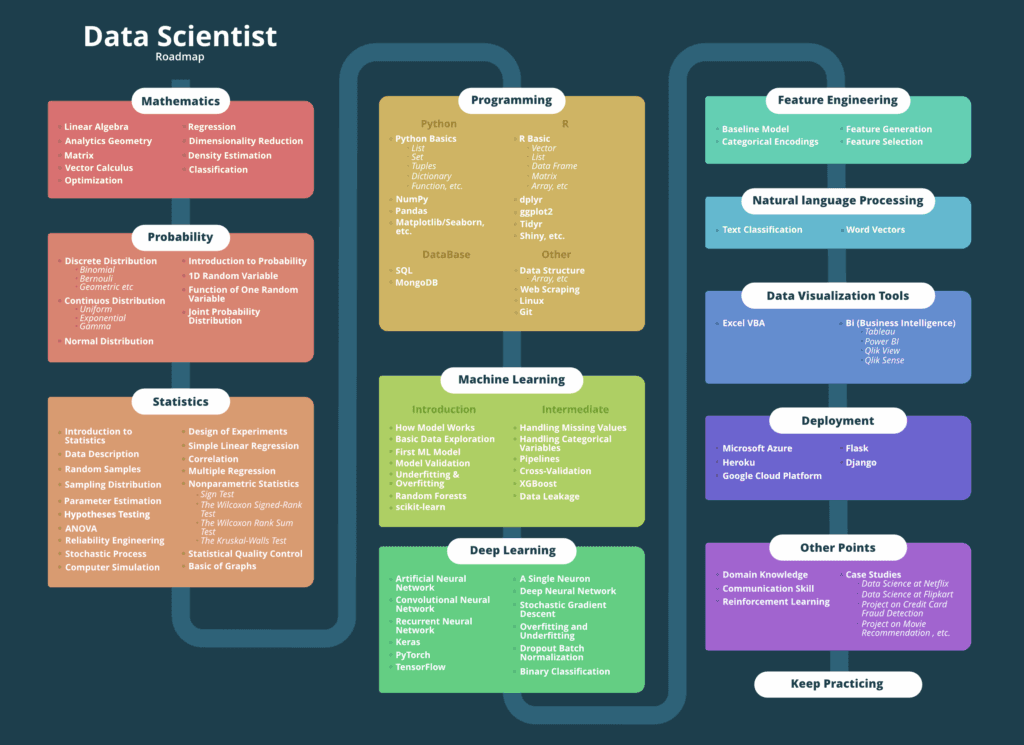
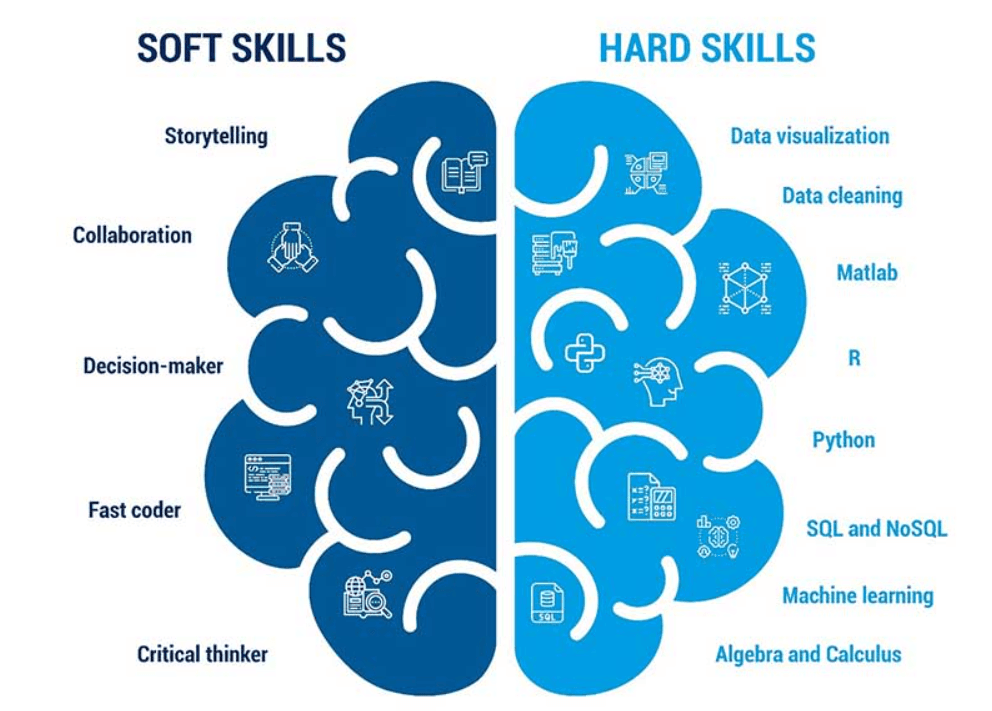
Here are some sample roadmaps for a data science and analytics role (some of these points cloud be revised in the context of Gen AI)
Conclusions
The future belongs to those who adapt, not those who cling to outdated assumptions. By embracing AI and learning to understand its capabilities, business professionals can become indispensable players in a rapidly shifting market. Will you be a leader or a relic?